
Jan 13, 2026
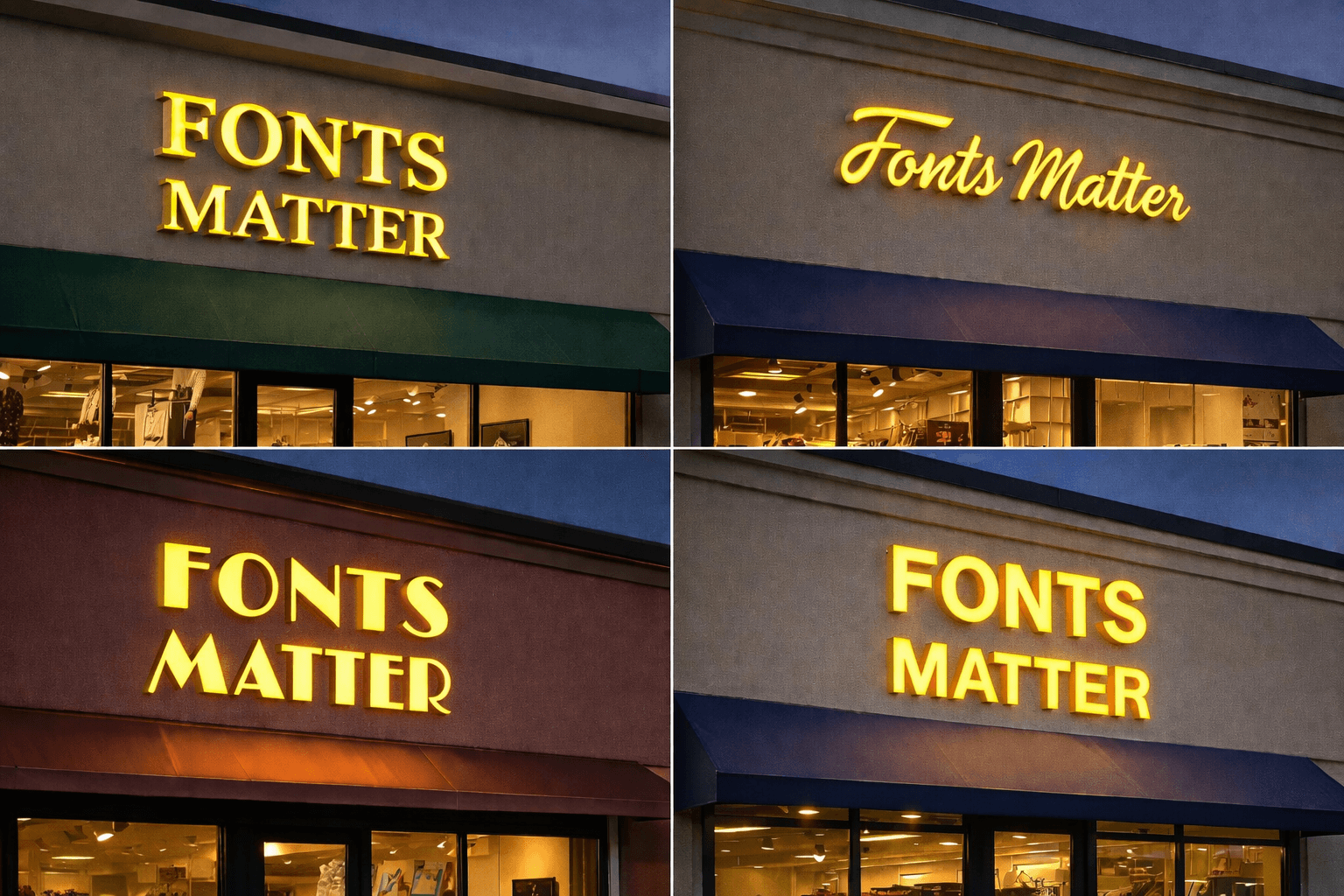
Font isn’t decoration. It’s performance.
Most people think the “design” of a sign is the logo, the lighting, the colors.
But the font choice can be the difference between:
instant recognition
and a driver missing the turn
and a customer walking past the door
Here’s what the best sign fonts do (and why):
1) They survive distance + motion
Wayfinding and traffic typefaces are designed around legibility under real conditions—glare, speed, imperfect angles, and split-second reads. That’s why the highway world has debated fonts like Clearview vs. Highway Gothic for years.
2) They avoid “character collisions”
A good signage font reduces confusion between characters like I / l / 1 and O / 0, because those mistakes happen constantly in the field. DIN legibility guidance even calls out designing these forms to be more distinguishable.
3) They’re built around legibility rules (not taste)
Germany’s DIN 1450 is literally a legibility standard built around readable letterforms and viewing conditions, not “what looks cool.”
4) They’re paired with the right contrast + materials
One of the biggest lessons from the highway-font debate: type isn’t the only variable. Contrast and retroreflective materials can drive legibility as much (or more) than the letterform itself.
In wholesale fabrication, this matters more than people think.
Because once a sign is cut, built, and installed—the font becomes permanent behavior.
So, here’s the real question:
What font do you think performs best on signs in the real world—and why?